“UNDER BLUE AND GRAY SKIES,” A Harrisonburg Search and Rescue Org Uses K9s to Track and Find Missing Persons
In Harrisonburg, dogs differing in color, size and breed come together and share one distinct passion: search and rescue.
“We got the call that [the missing boy] had been located, and we were the closest team,” Misty Sampson, the president of Blue and Gray Search and Rescue Dogs Inc. said. “He was all scratched up, his teddy bear clutched to his arm. We [told him] there were going to be rescue squads and flights and sirens, and he said, ‘And my mom?’ And we're like, ‘Oh yeah. Your mom will be there.’ That was my very first experience...and was like, this is what it's about.”
Stories like this are what fuels Blue and Gray’s overall mission, one of search, support and service — something they have provided and perfected for over three generations.
Blue and Gray Search And Rescue (SAR) is a 501(c)(3) nonprofit based in Virginia that aims to serve the Mideast region by training K9s to locate missing persons and human remains. This year alone, a current team of 14 members and 22 dogs have searched roughly 7,293 miles and have trained 31,923 miles, spending a total of 294.30 hours dedicated to bringing others home.
The organization started with Martha Showalter and her German Shepherd, Nutmeg, in 1980. Back then, it wasn’t as easy to find mentors or organizations dedicated to K9 search and rescue, but this didn’t stop Showalter. Committed to her vision, she spent three years commuting three hours north to work alongside Virginia Search and Rescue Dogs, an organization that specializes in training German Shepherds. This experience motivated her to start her own organization that welcomed any breed of dog willing to put in the work.
After gathering seven passionate trainers with an assortment of different types of dogs, including cattle dogs, bouviers, golden retrievers and labradors, the Blue and Gray Search and Rescue mission was finally born in 1984. From there, the team members traveled to different areas around the world, such as Mexico City, Great Britain and Ireland to learn the art of search and rescue.
Since then, Blue and Gray has participated in rescues in Canada, New Orleans, South America and the local Harrisonburg community. However, they are always eager for new K9s to complete the elaborate certification process, as well as volunteers to expand their network and challenge the K9s’ abilities.
“It's not just canine trainers that are on the team, it's just a bunch of random people that have the desire to help their community come together,” Sampson said. “It's always good to have diverse people out in the woods so their dogs aren't continually finding the same ol’ people.”
K9 training can start as early as seven weeks for a pup, and it takes about two years to get their first certification. Trainers must find a local team to join so they can learn directly from the members of the organization. The trainer needs to obtain basic handler certifications, such as CPR, navigation and first aid, as well as K9 certifications like the American Kennel Club (AKC) and the Canine Good Citizen (CGC). Through this process, K9s learn how to use trailing or air-scenting for their searches.
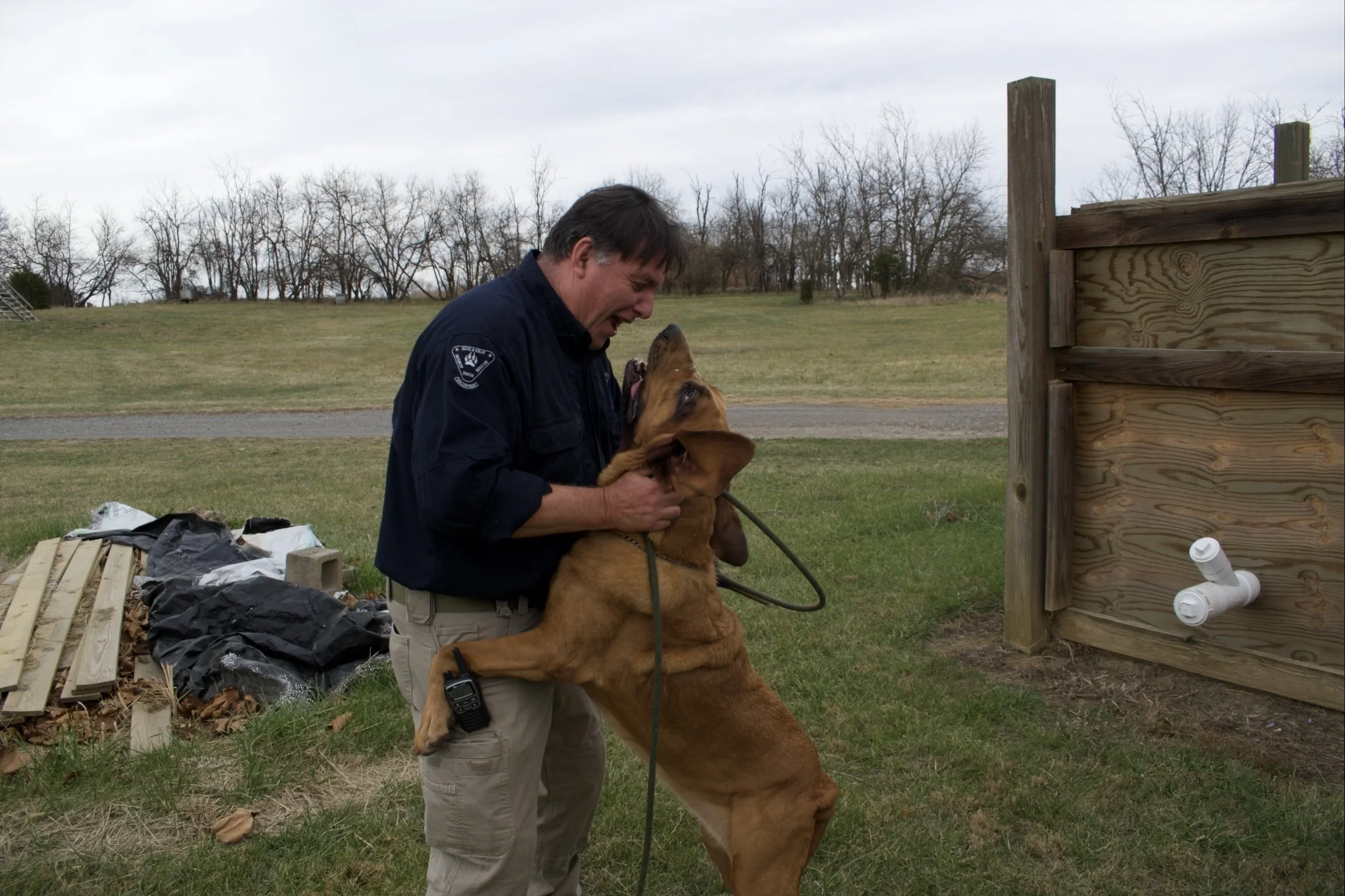
Trailing dogs, also known as tracking dogs or scent-specific dogs, search using a specific article from the missing person to navigate their whereabouts. From there, they use a Point Last Seen (PLS) or Last Known Point (LKP) to find a location and follow the subjects’ scent on the ground. Blue and Gray have bloodhounds for tracking and trailing.
Another method of search is air-scenting, a more general tactic that aims to identify any human odor. The wind keeps scents in the air for long periods of time, which the K9s, specifically retrievers, border collies and German shepards, use to search for humans. Under perfect conditions, depending on the strength of wind, landscape and the potentness of the scents, dogs can smell an air scent for up to twelve miles.
The final test to be certified is a 40- and 160-acre search, Sampson said. Both faux-searches require navigating to a simulated missing person with just a compass and flashlight. The trainer and K9 have five hours to find the missing person in the 160 acre test. The 40-acre test is a night search, where trainers spend the night in the woods looking for one to three missing persons. The K9s recertify every two years and the trainers recertify through the state every three years.
“I remember on one of my 160s...I needed a moment that I had to leave the evaluators, kind of regather myself...I pulled myself together and I finished it,” Sampson said. “The canine stuff came very, very natural to me. The navigation was a learned thing.”
Although the training process is lengthy and complex, it is necessary for the diversity of cases the organization takes part in. In the past few years, Sampson has seen a rising trend of many searches relating back to dementia patients. Before then, she said, it skewed toward hikers due to lack of technology systems like GPS and smart phones. Nonetheless, every search has its significance that the trainers never forget.
The tight knit community of search and rescue dogs has created a supportive network of passionate K9s and trainers eager to help those in need. The countless hours of training is worth even the slightest chance of bringing someone home, portraying the dedication of the hands and paws of each SAR operation.
“There's so many teams, but we all share the excitement,” Sampson said. “Whether it's our team or another team, it's anyone in the community. If we have a success story that someone's actually brought home, typically alive, then it's a win for everyone.”
11/25
Full photo gallery with captains here